
Training on the Application of Artificial Intelligence in the Internet of Things.
About
The AIoT Academy led by the Montenegrin Association for New Technologies (MANT) in cooperation with PRONA – Foundation for Science Promotion, is an initiative aimed at establishing a sustainable non-formal education program in Artificial Intelligence applied to the Internet of Things (AIoT) in Montenegro.
The project will be implemented through an intensive four-week training program (3 ECTS equivalent), combining theoretical lectures, laboratory practice, independent work and project-based learning. Participants will gain hands-on experience in designing, developing and testing AIoT systems in areas such as healthcare, agriculture, industry, disaster prevention and smart services.
A multidisciplinary team of experts in electronics, embedded systems, software engineering and AI technologies will guide high school students, university students and professionals, strengthening local capacities in this rapidly growing field.
Beyond direct participants, the project will contribute to strengthening Montenegro’s digital transformation and technological competitiveness, while creating the foundation for the future development of a recognized micro-credential program in AIoT.
This project is co-financed by the Ministry of Education, Science and Innovation of Montenegro.
Duration: 2025–2026.
O Akademiji
Obuka o primjeni vještačke intelegencije u internetu stvari – AIoT Akademija
Cilj AIoT Akademije je:
Uspostavljanje i pilot implementacija neformalnog obrazovanja (obuke) u oblasti primjena Vještačke inteligencije u Internetu stvari i njegovo prerastanje u mikrokvalifikaciju (microcreditals). Specifični ciljevi AIoT akademije su:
● Razvoj kurikuluma za neformalno obrazovanje i obuku u AIoT.
● Pilot implementacija razvijenog kurikuluma sa prvom gerenacijom polaznika.
● Ostvarivanje uslova za odživost AIoT akademije.
● Prerastanje AIoT Akademije u mikrokvalifikaciju (microcredentials), kada se za to stvore zakonski uslovi,
● Obezbjeđivanje ljudskih resursa za potencijalni razvoj ove oblasti u CG.
AIoT akademija je teorijsko-praktični kurs neformalne edukacije za sledeće ciljne grupe:
● srednjoškolci,
● studenti,
● profesionalci koji rade u oblasti tehnologije i
● ostali zainteresovani za ovaj način usavršavanja.
Pored ostalog, AIoT akademija će obrađivati sledeće tematske cjeline:
● AIoT u medicini,
● AIoT u poljoprivredi,
● AIoT u prevenciju i upravljanju prirodnim katastrofama,
● AIoT za pomoć industriji i servisima i
● Pravni i etički aspekti AIoT
AIoT Akademija će se implementirati kroz 4 radne nedelje u ekvivalentnom opterećenju od 3 ECTS po sledećem programu:
● Modul 1, Teorijska nastava, Nedelja 1; 15 sati
● Modul 2, Praktična nastava, laboratorija, Nedelja 2; 15 sati
● Modul 3, Praktična nastava, projekat i demonstracija stečenih znanja, Nedelja 3,4; 5 sati
● Modul 4, Samostalni rad, teorijsko-praktični, nedelja 1,2,3,4; 15 sati
Deset najboljih učesnika Akademije će biti nagrađeno besplatnim učešćem na međunarodnoj ljetnjoj školi SS-CPSIoT (7th Annual Summer School on Cyber Physical Systems and Internet of Things, 09-13 June 2026, Budva , Montenegro) koja se održava u okviru MECO konferencije (Mediterranean Conference on Embedded Computing – MECO).
Lecturers
- Natalie Simson, Infineon Technologies and Technical University Munich, Germany
- Johannes Ecker, Infineon Technologies and Technical University Munich, Germany
- Muhammad Shafique, New York University Abu Dhabi, UAE
- Alberto Marchisio, New York University Abu Dhabi, UAE
- Abdelhakim Baouya, University of Toulouse, France
- Brahim Hamid, University of Toulouse, France
- Otmane Ait Mohamed, Concordia University, Canada
- Saddek Bensalem, VERIMAG, France
- Nabil Abdennadher, University of Applied Sciences – Western Switzerland, Switzerland
- Dražen Jurišić, University of Zagreb, Croatia
- Andrej Škraba, University of Maribor, Slovenia
- Matija Stojanović, University of Montenegro, Montenegro
- Vladimir Mladenović, University of Kragujevac, Serbia
- Radovan Stojanović, University of Montenegro, Montenegro
- Jovan Đurković, MECOnet, Montenegro
- Vesna Maraš, University of Montenegro, Montenegro
- Mitar Otašević, University of Montenegro, Montenegro
- Dejan Zejak, University of Montenegro, Montenegro
Participants
- Viktor Vuković, University of Montenegro, Montenegro
- Andrej Radović, University of Montenegro, Montenegro
- Dubravka Šćekić, University of Montenegro, Montenegro
- Stanka Mišeljić, University of Montenegro, Montenegro
- Azra Rastoder, University of Montenegro, Montenegro
- Mitar Otašević, University of Montenegro, Montenegro
- Amela Murić, University of Montenegro, Montenegro
- Hima Zafar, University of Novi Sad, Serbia
- Igor Vujošević, University of Montenegro, Montenegro
- Filip Jovanović, Epsilon, Montenegro
- Natalija Marniković, PRONA, Montenegro
- Jelena Ćetković Grbović, University of Montenegro, Montenegro
- Aleksandar Jeknić, PRONA, Montenegro
- Petar Dujović, PRONA, Montenegro
- Aleksandar Krivokapić, University of Novi Sad, Serbia
- Masoud Sadrnezhaad, Linköping University, Switzerland
- Muhammad Waqas, Mälardalen University, Switzerland
Teaching and learning material
- AIoT in Healthcare
- AIoT in Agriculture
- AIoT in Disaster Prevention and Management
- AIoT for Industry and Services
- Legal and Ethical Aspects of AIoT
Programme & Teaching Materials
AIoT Academy is designed as a theoretical and practical non-formal training program in the field of Artificial Intelligence applied to the Internet of Things (AIoT). The program is tailored to different levels of participants and aims to provide both foundational knowledge and hands-on experience.
AIoT Academy is implemented over 4 working weeks.
WEEK #1: Theoretical part of the training, online, 15 hours in total
WEEK #2: Practical part of the training, laboratory, in-venue, 15 hours in total
WEEK #3, #4 : Project Development and Demonstration, 5 hours in total
WEEK #1, #2, #3, #4 :Independent Theoretical-Practical Work, 15 hours in total
Application (Prijava)
Prijava za AIoT Akademiju
● Do 15. aprila 2026.
● Link za prijavu.
Activities Workflow
| Date | Event content/Media |
| 8.12.2025 | Official signing of the Agreement between the “Ministry of Education, Science and Innovation of Montenegro” and NGO “MANT” for the implementation of the Academy |
| 27.02.2026 | AIoT Academy – Info Day | Berane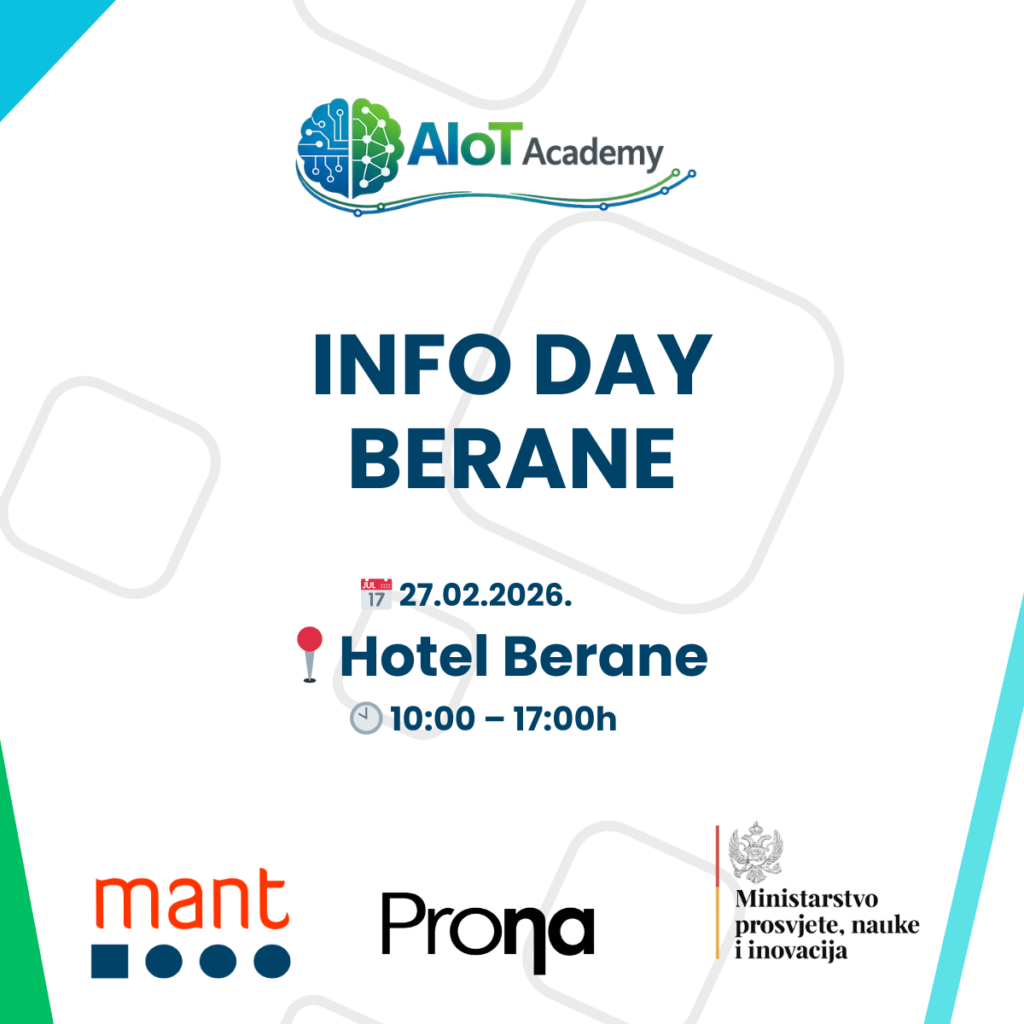 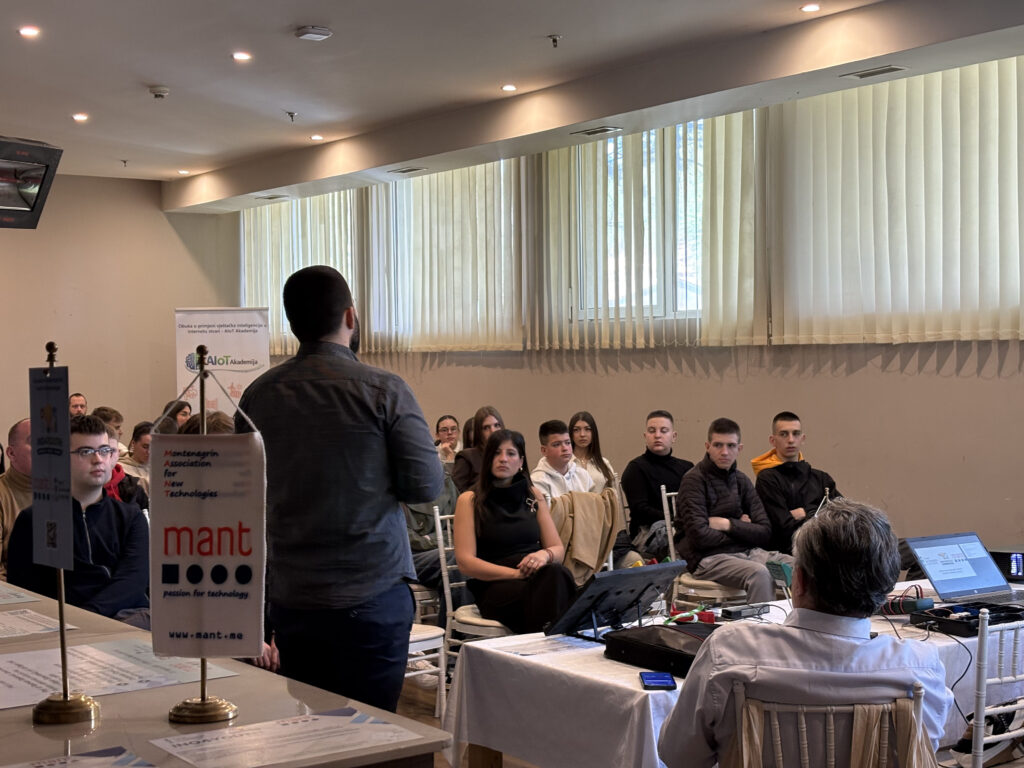 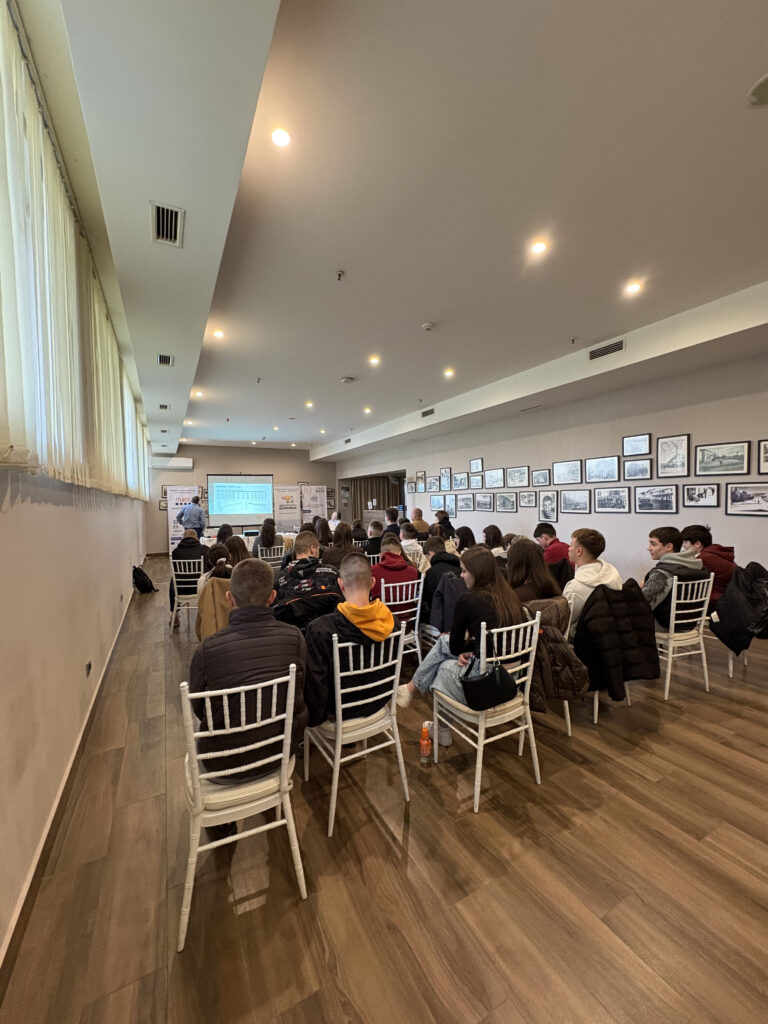 Attendance list1 Attendance list2 |
| 6.3.2026 | AIoT Academy – Info Day | Bar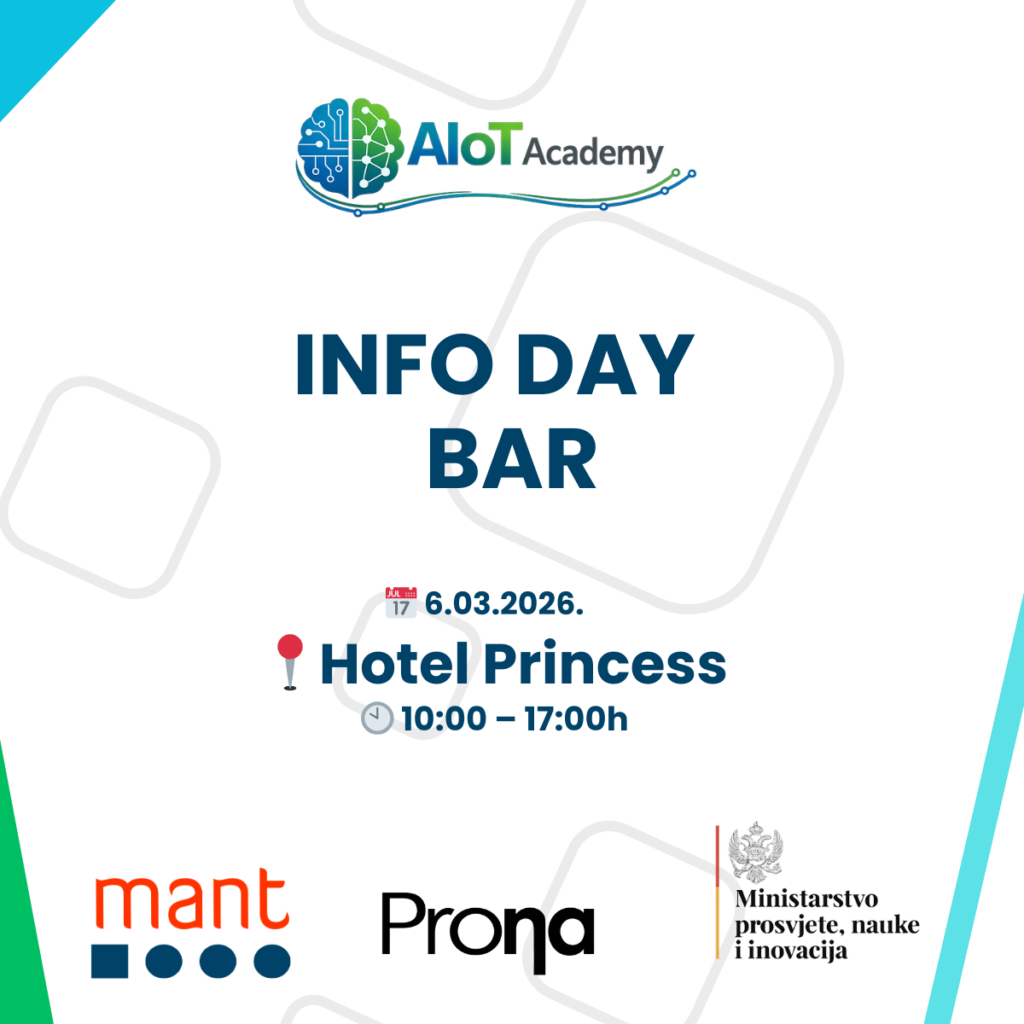 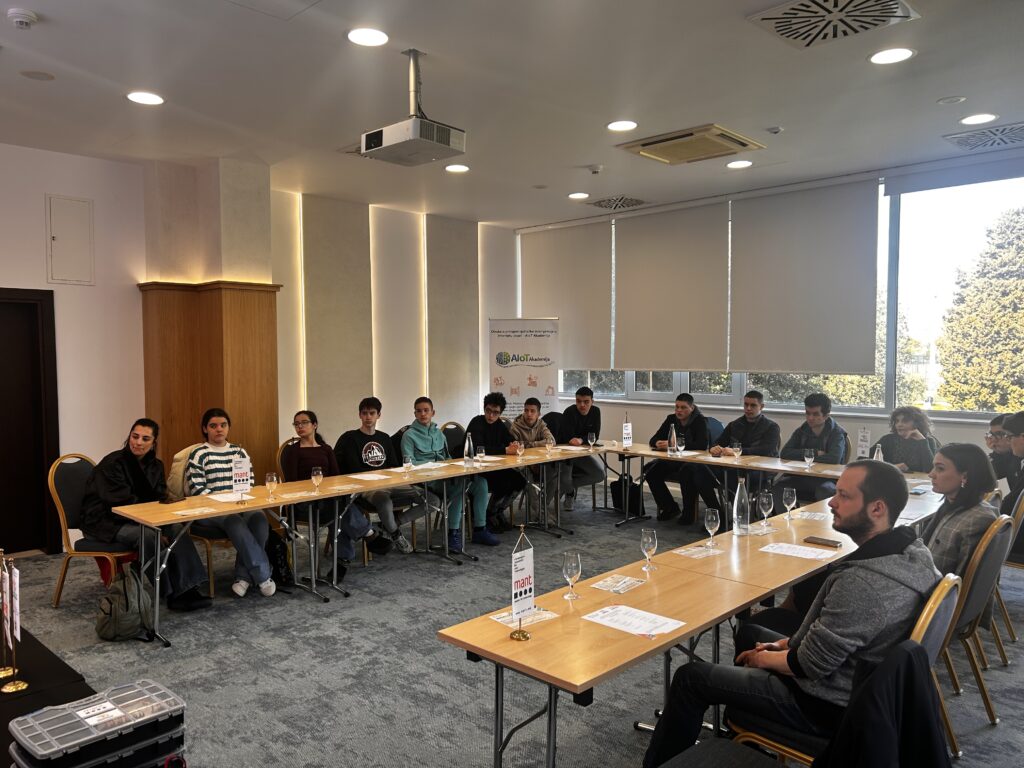 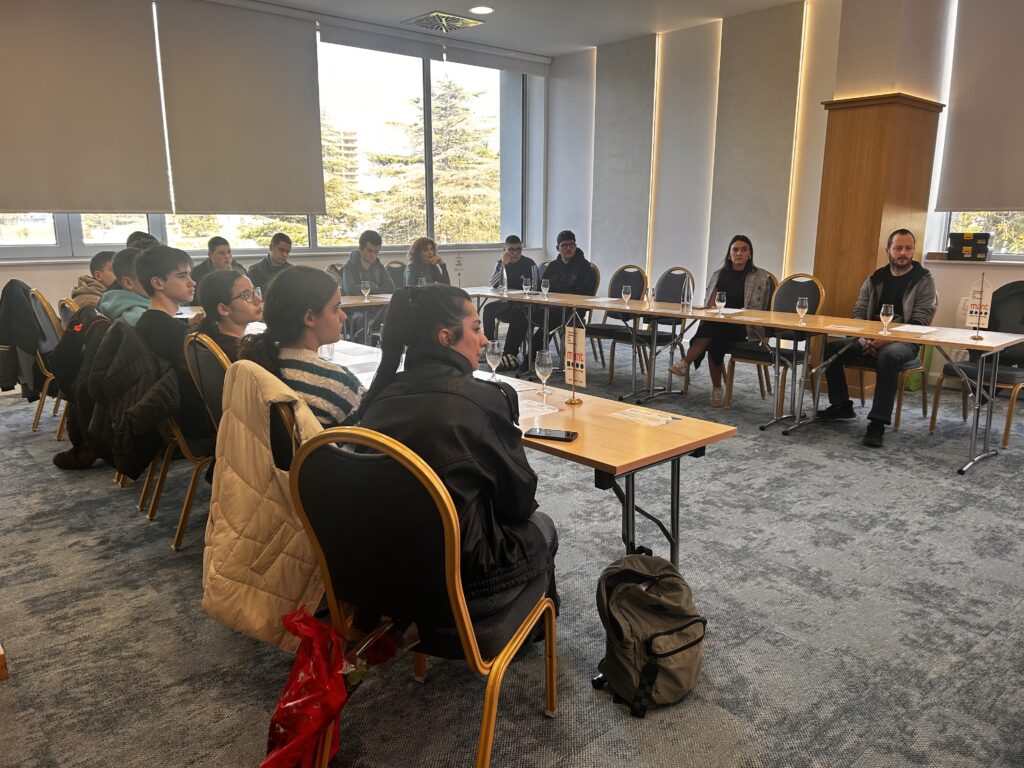 Attendance list |
| 8.5.2026 | Preparation lecture and demonstration – Arduino PID regulator with elements of AI, Podgorica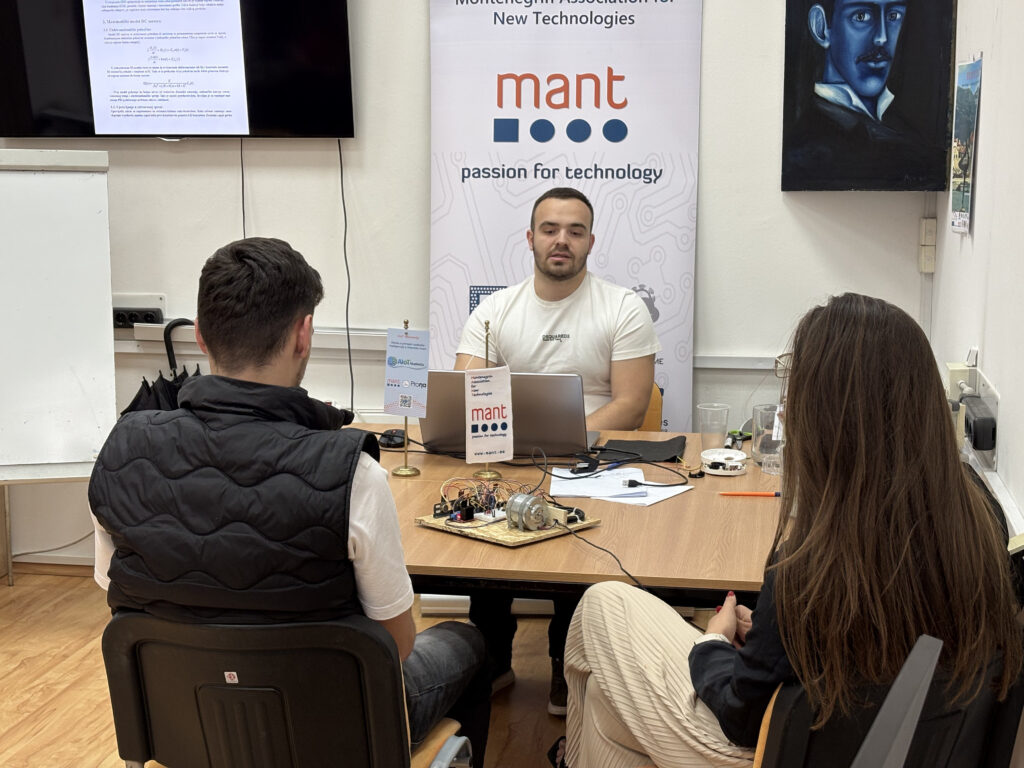 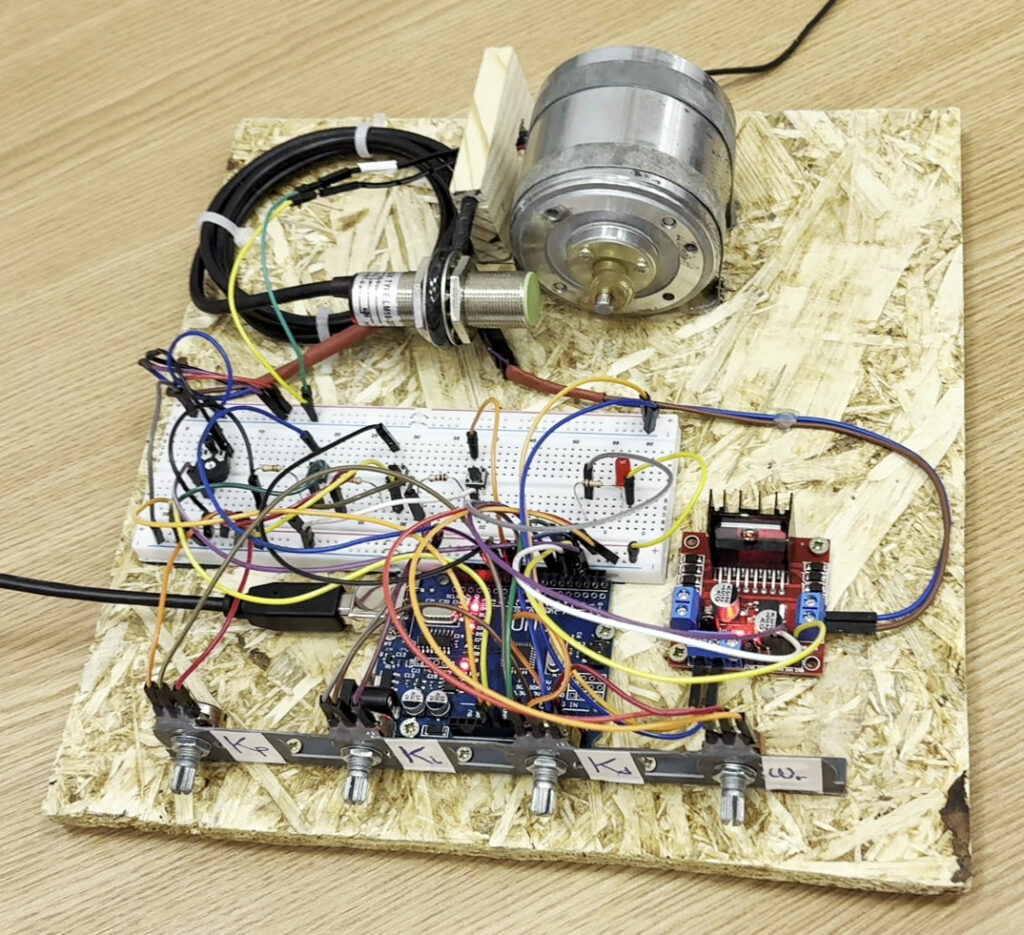 Attendance list |
| 9-13.6.2026 | AIoT Academy lectures held in Akademija Znanja, Budva, 9-13.6.2026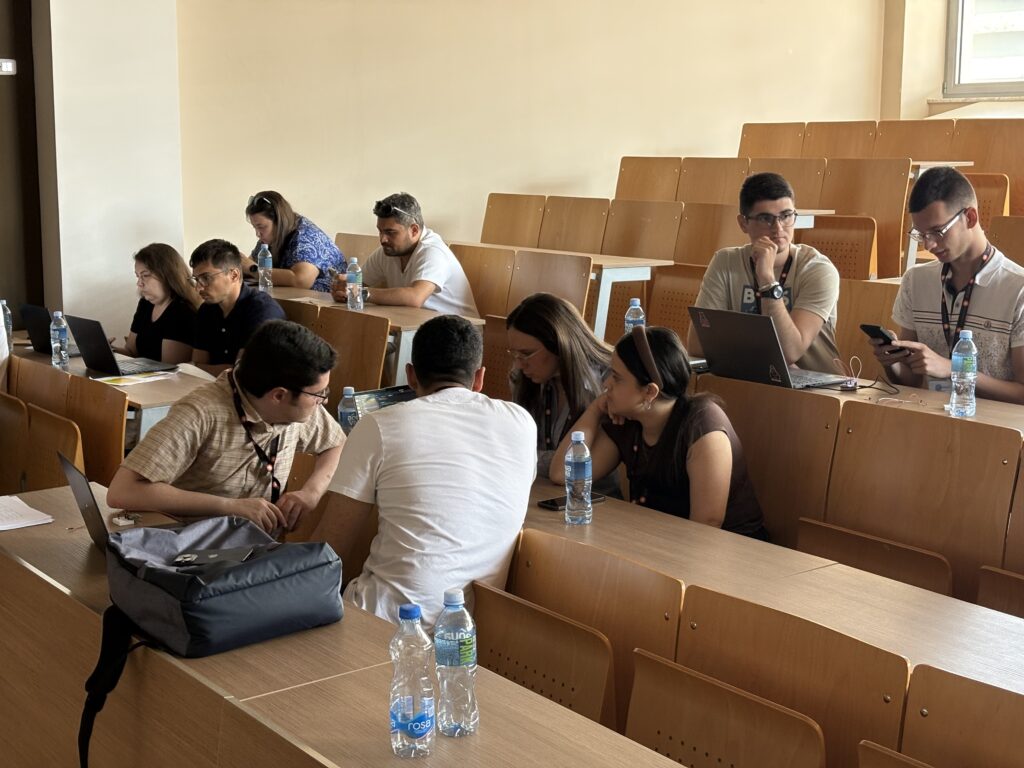 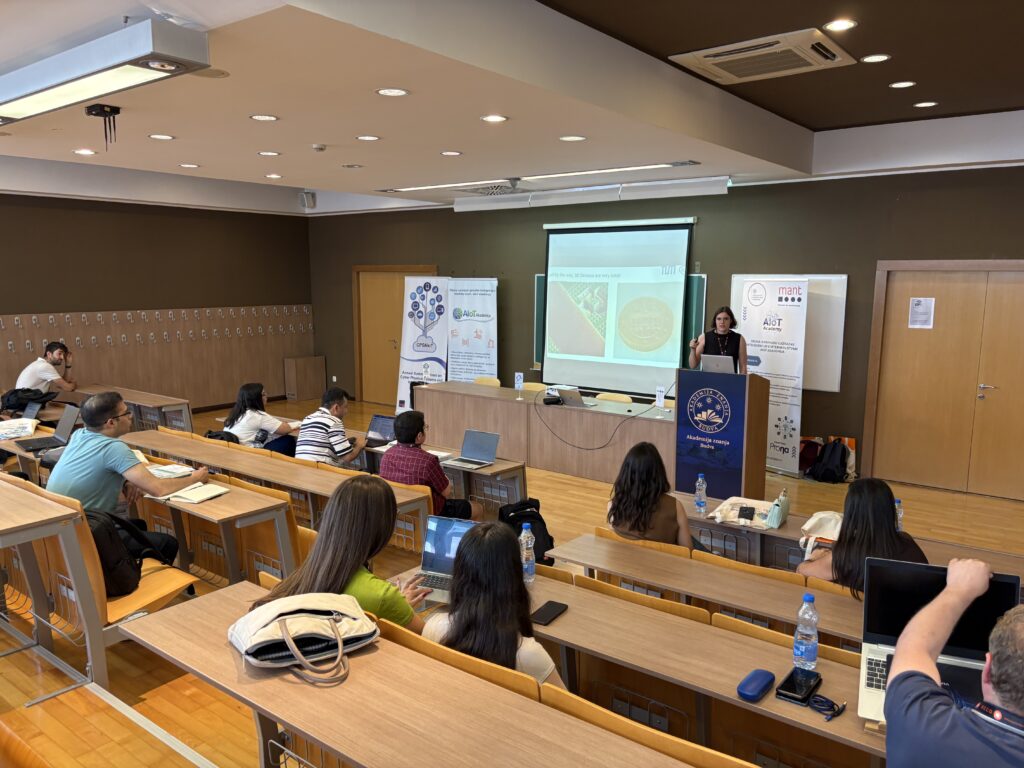 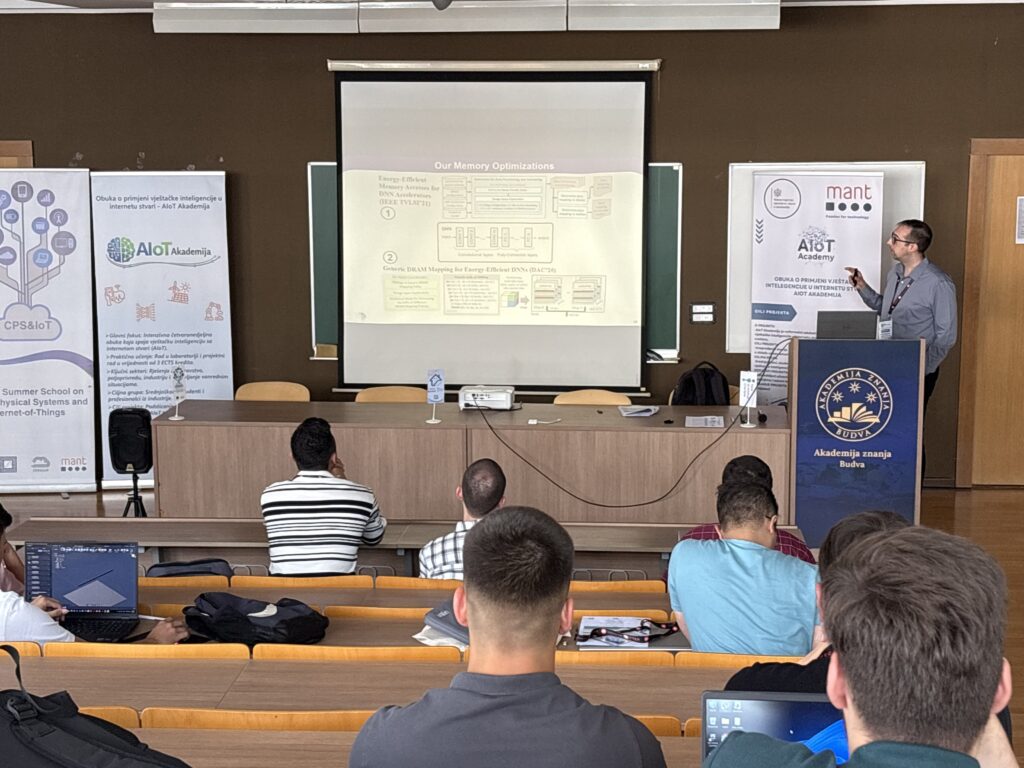 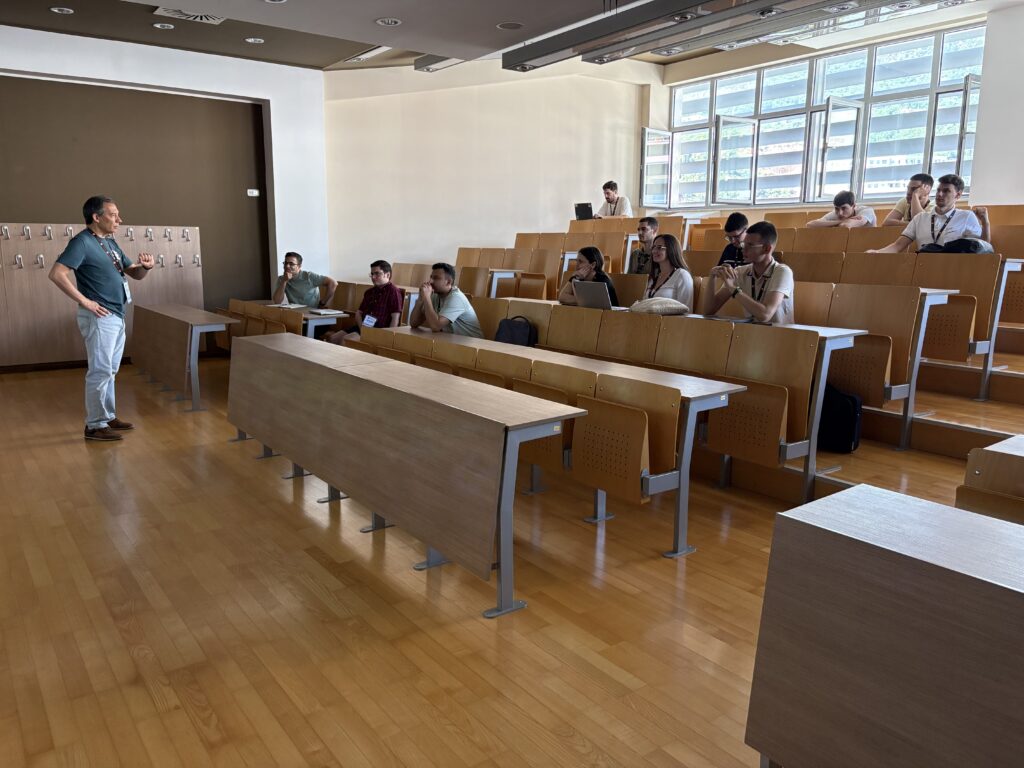 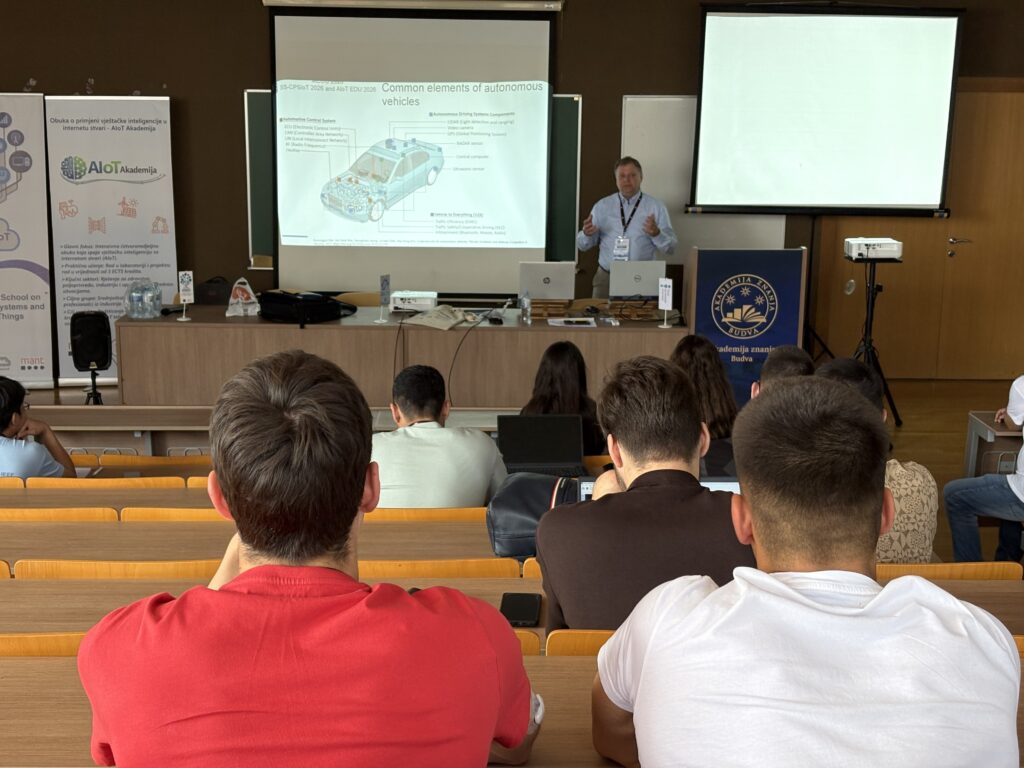 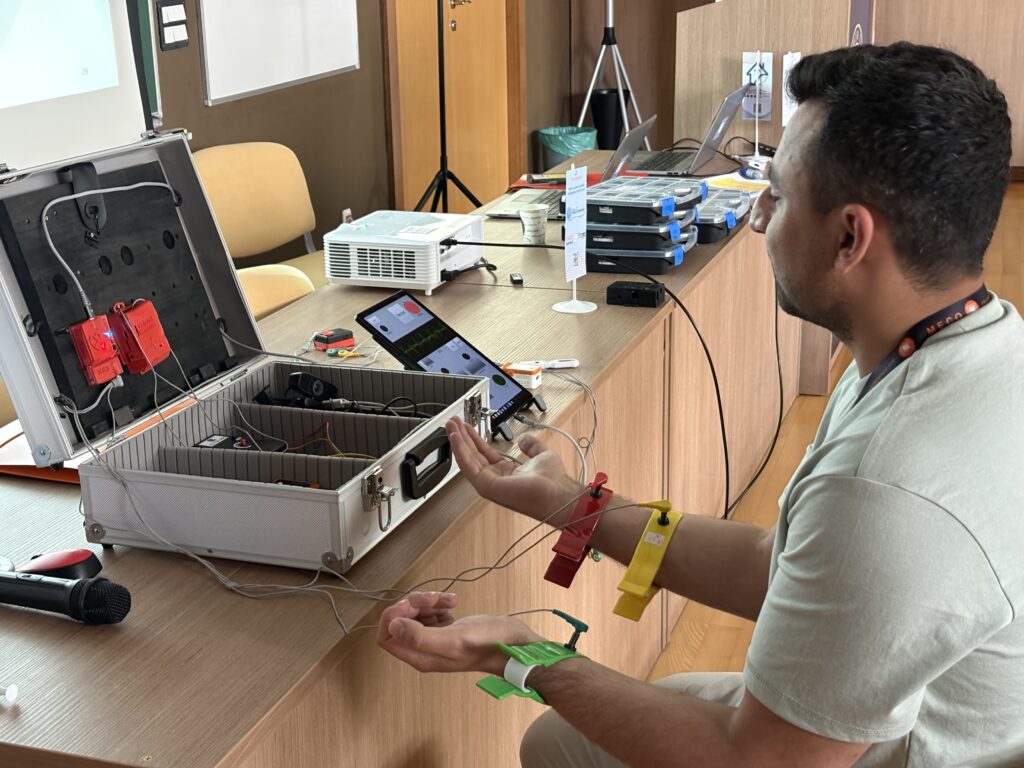 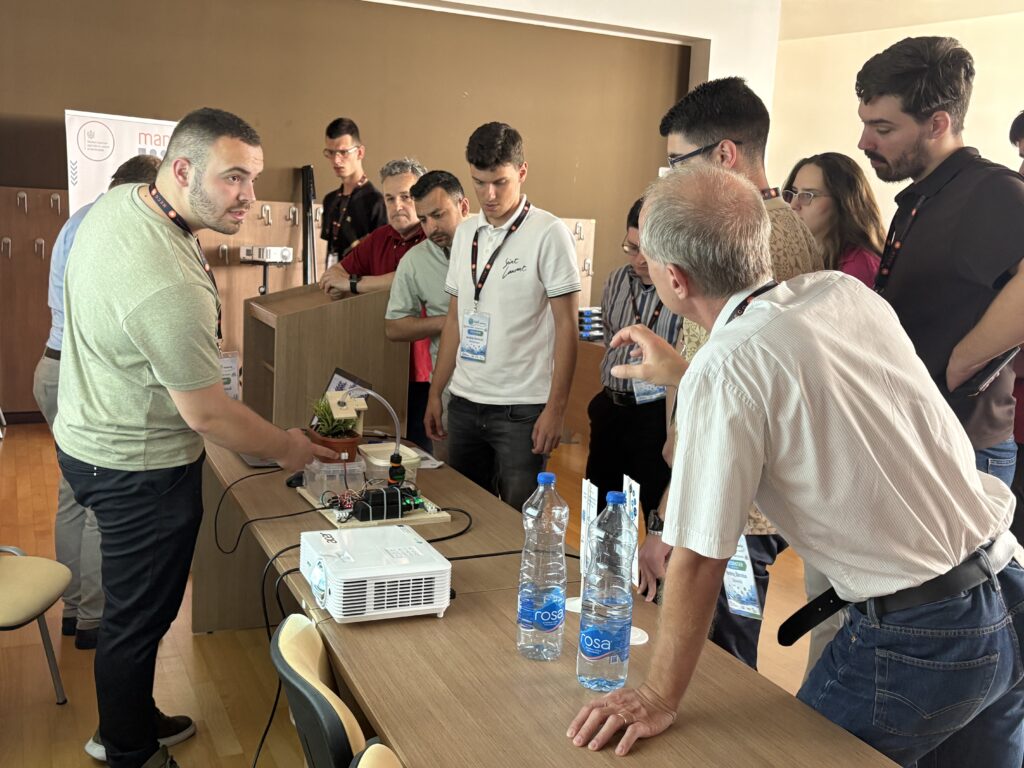 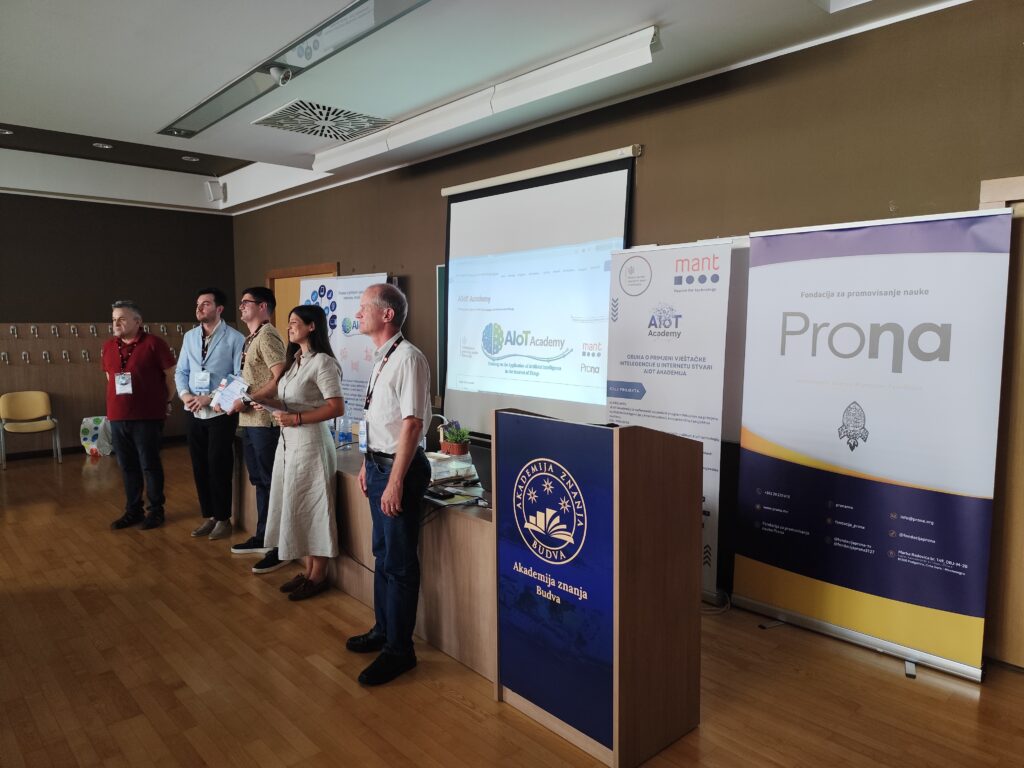 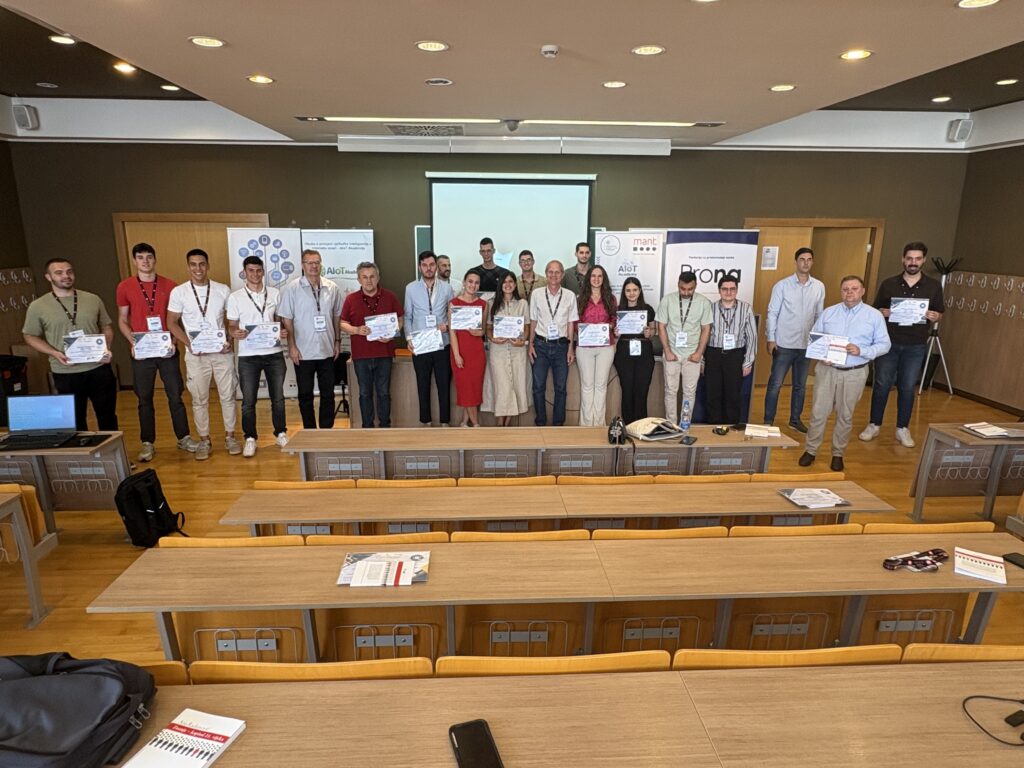 Gallery Programme Attendance lists |
| 31.7.2026 | Proceedings of the 7th Summer School on Cyber-Physical Systems and Internet-of-Things Including AIoT Academy 2026 have been published in Zenodo, ResearchGate and MECOnet Events and Publishing. |